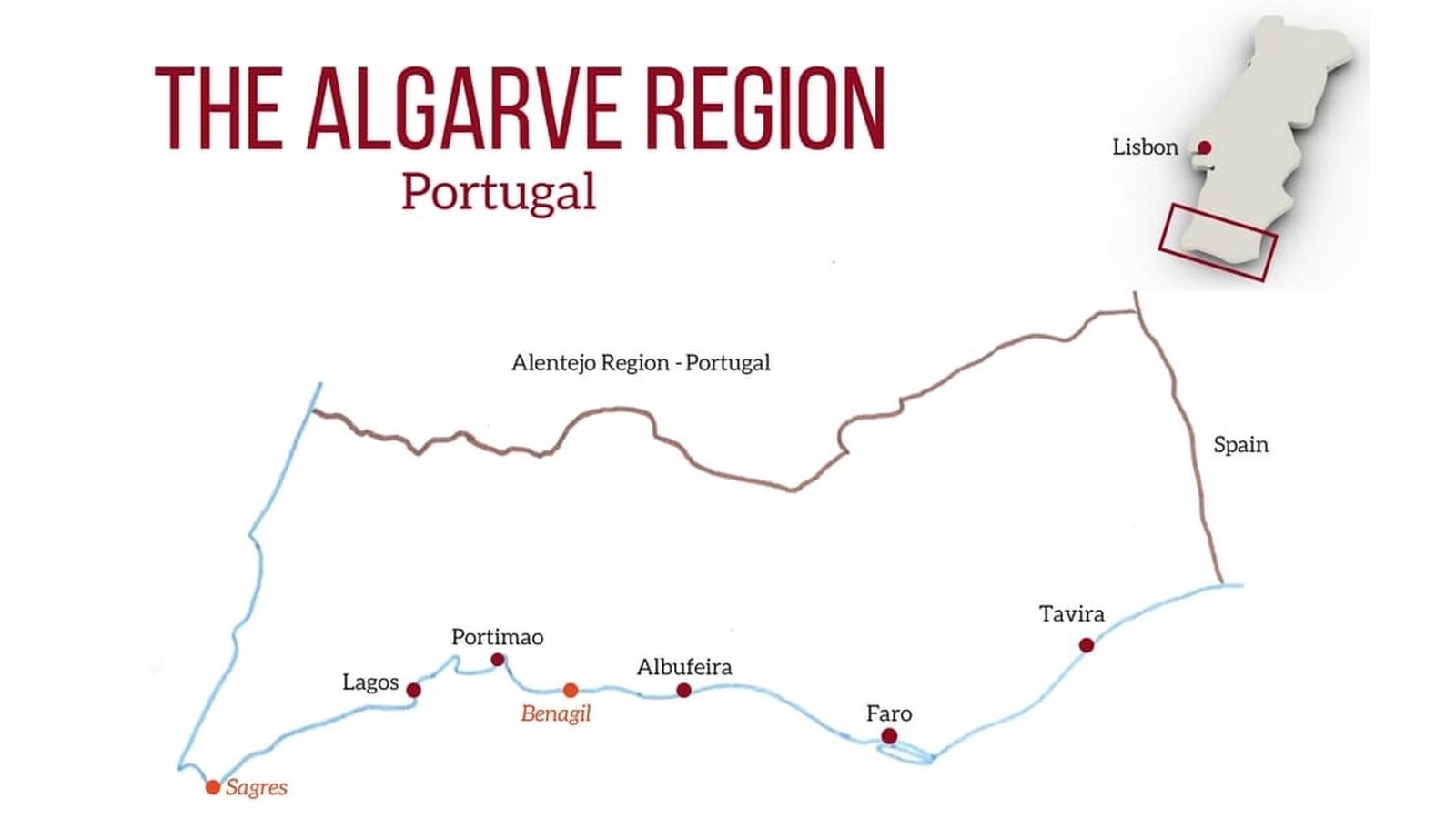
There is no single "Algarve AL licence." There is a national Alojamento Local framework, set in Lisbon and administered locally, and there are 16 municipal councils each making decisions about how aggressively to apply the powers that framework grants them. For a British owner with a villa in Albufeira, the compliance picture is different from that facing an owner in Silves or Tavira — not because the underlying obligations differ, but because the political and administrative environment in each municipality shapes how those obligations are enforced, and whether additional restrictions will be applied.
This guide maps the complete Algarve Alojamento Local compliance landscape as it stands following the reforms of Decreto-Lei 76/2024 and the implementation of EU Regulation 2024/1028. It is structured as an overview — for municipality-specific detail, each section links to a dedicated guide. The universal obligations, which apply regardless of location, are covered first.
Algarve Alojamento Local Compliance: What DL 76/2024 Changed
The full analysis of DL 76/2024 is available separately. For the purposes of this overview, the key changes are:
- Transferability: AL registrations can now be transferred to a buyer when a property is sold. This makes a compliant, current registration a financial asset — one that a buyer's solicitor will examine during due diligence.
- Containment zones: Municipalities can designate areas of high AL density where new registrations are suspended. Owners who are registered before a designation are protected; those who are not face significant practical difficulties.
- Insurance mandate: Civil liability insurance is now an explicit condition of AL registration, not merely best practice.
- Renewal conditions: Licences are subject to renewed scrutiny on a rolling basis. A registration that was compliant two years ago may not remain so if underlying certifications have lapsed.
- RNAL verification: EU Regulation 2024/1028 introduced the requirement that all booking platforms verify AL registration numbers against the Registo Nacional de Alojamento Local (RNAL). Listings without valid registration numbers can be removed from platforms.
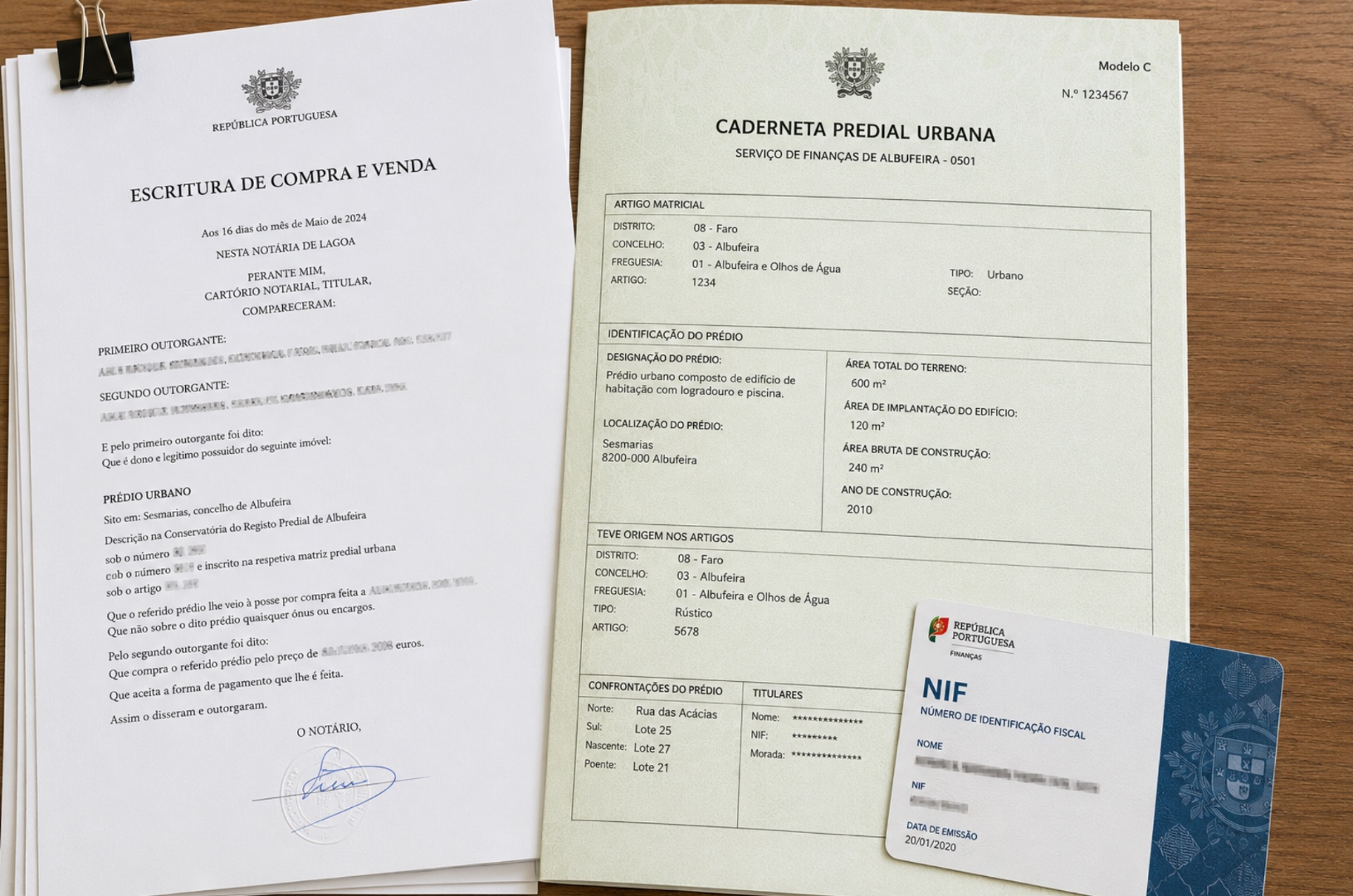
The Universal Compliance Checklist
Regardless of which municipality your property sits in, every AL registration in the Algarve requires the following. None of these can be delegated away — they are legal conditions of operation.
- AL registration certificate — the core document, issued by the relevant Câmara Municipal and recorded on the RNAL. The registration number must appear on all booking platform listings.
- Gas safety certificate (Certificado de Segurança de Gás) — mandatory where any gas appliances are present, covering both mains gas and LPG. Renewed every two years.
- Electrical safety certificate (Certificado de Segurança Elétrica) — covers the complete electrical installation. Renewed on a schedule set at the time of inspection.
- Energy performance certificate (Certificado Energético) — the Portuguese equivalent of an EPC. Required at registration and subject to minimum standards that are progressively tightening under EU energy efficiency policy.
- Fire safety equipment — fire extinguisher, fire blanket, and first-aid kit, documented and accessible to guests, with photographic evidence of placement.
- Livro de Reclamações — the complaints book, in physical or digital form, accessible to guests throughout the stay.
- Civil liability insurance — explicitly required under DL 76/2024. Policies must specify coverage for short-term tourist accommodation and must be current at all times.
- Guest registration via AIMA — every guest must have their identity data submitted through the ePortugal AIMA portal within 24 hours of arrival. This is one of the most commonly violated obligations among remotely managed properties.
The Eight Key Municipalities: What Differs
The Algarve's 16 municipalities divide broadly into three categories: those under significant regulatory pressure (high AL density, active containment zone politics), those under moderate pressure, and those — mostly inland — where the environment is stable. The eight municipalities most relevant to British villa owners span all three categories.
High Regulatory Pressure
Loulé administers the most valuable stretch of Algarve coastline: the Golden Triangle (Almancil, Quinta do Lago, Vale do Lobo), Vilamoura, and Quarteira. It is the municipality most likely to invoke containment zone powers under DL 76/2024, and compliance documentation is scrutinised at the highest level in transactions here. Read the dedicated guides for Loulé, Almancil, Vilamoura, and Quarteira.
Albufeira has the highest AL density of any municipality in the Algarve by most measures. The old town and the strip generate intense regulatory attention, and the Câmara Municipal has been among the most active in applying DL 76/2024 tools. New registrations in Albufeira's most saturated parishes face an uncertain environment. Read the Albufeira guide.
Moderate Regulatory Pressure
Portimão includes Praia da Rocha — a high-density resort area that attracts containment zone scrutiny — alongside the working city of Portimão itself, where AL density is more moderate. The municipality requires careful navigation because the regulatory exposure varies significantly by parish. Read the Portimão guide.
Lagos has a strong international rental market concentrated around its historic centre and Meia Praia. Like Portimão, Lagos municipality contains areas of very different AL density, and containment zone risk is geographically concentrated. Read the Lagos guide.
Faro operates as both the regional capital and a significant rental market, with properties ranging from city-centre apartments near the historic island to suburban villas. The regulatory environment is active, and the Câmara Municipal of Faro has demonstrated willingness to use its DL 76/2024 powers. Read the Faro guide.
Lagoa covers Carvoeiro — one of the Algarve's most picturesque resort towns — alongside quieter inland areas. The coastal parish faces moderate AL density pressure; the municipality overall is less exposed than Albufeira or Loulé. Read the Lagoa guide.
Stable Regulatory Environment
Tavira has deliberately positioned itself as a lower-density, higher-quality destination. The Câmara Municipal has been broadly welcoming of managed tourism development and has not indicated interest in containment zone designations. Its historic centre and the offshore island of Tavira attract a sophisticated guest profile, and AL compliance here is relatively straightforward. Read the Tavira guide.
Silves is the inland municipality — the ancient Moorish capital and its surrounding rural parishes, popular with British buyers seeking quintas and village houses. AL density in Silves is low, containment zone risk is minimal, and the regulatory environment is the most stable of the eight municipalities covered here. Read the Silves guide.
The municipality you are in determines not just who administers your AL licence, but how much political pressure that administrator is under — and how likely they are to restrict your operation.
EU Regulation 2024/1028 and RNAL Verification
EU Regulation 2024/1028 came into force in May 2026 and imposes obligations on short-term rental platforms — Airbnb, Booking.com, Vrbo, and all others operating in the EU — to verify AL registration numbers against national registries. For UK owners, this has a practical consequence: any listing that lacks a valid RNAL registration number, or that carries an expired or inactive registration number, is subject to removal from the platform.
Portugal's RNAL is administered by Turismo de Portugal, accessible via turismodeportugal.pt. The registration number issued by the Câmara Municipal is the same number that appears on the RNAL, and it is this number that platforms will verify. Owners who have allowed their registration to lapse — or who are operating on an administrative registration that has not been formally confirmed — face the risk of platform-enforced delistings at any point from May 2026 onwards.
Managing Compliance from the UK
The majority of British Algarve villa owners are not resident in Portugal. They manage their properties remotely, relying on combinations of local property managers, letting agents, and, increasingly, compliance services such as APC. The challenge of remote management is not the existence of the obligations — those are fixed and well-documented — but the ongoing monitoring required to ensure that certifications are renewed on time, that guest registration submissions are made within the 24-hour window, and that insurance policies remain current and appropriate.
A lapsed gas certificate discovered during a municipal inspection, or a guest registration failure flagged by an AIMA audit, generates costs and complications that are disproportionate to the cost of preventing them. The APC service was built specifically for this scenario: a single point of management for every AL compliance obligation, operated in English, across all Algarve municipalities.
For a broader account of the full compliance framework applicable to UK-owned rental property in Portugal, including obligations that apply before AL registration begins, read our UK owner compliance guide. For municipality-specific detail, use the links throughout this article to navigate to each dedicated guide.