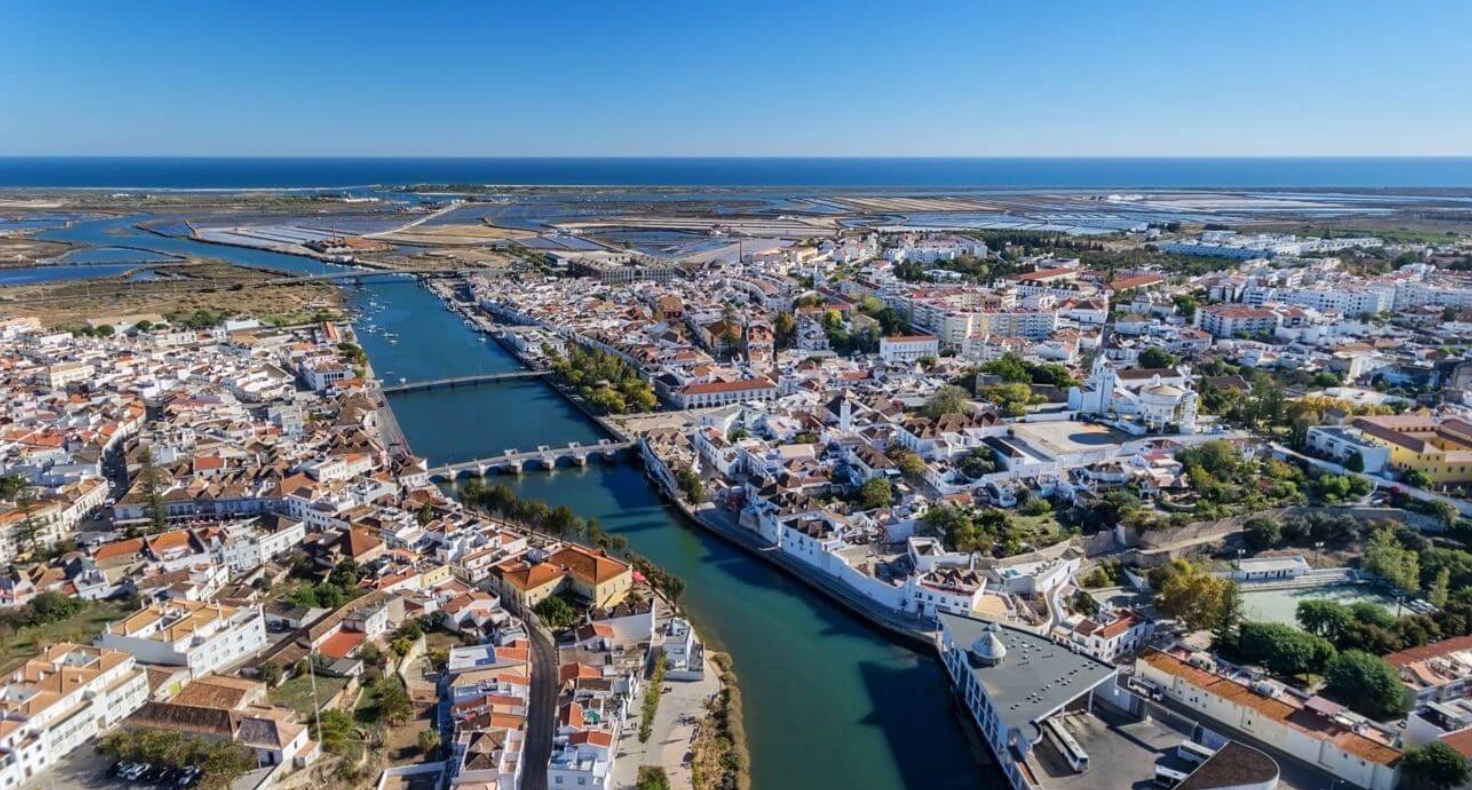
British buyers in the Algarve have been discovering Tavira with increasing conviction over the past five years. The town sits between the Ria Formosa lagoon and the Serra do Caldeirão foothills, it has a Roman bridge, a medieval castle, and more than thirty churches — and it is, by the standards of the Algarve's short-term rental market, comparatively lightly developed. For those who have moved on from Albufeira and Lagos, Tavira offers the classic Algarve experience without the density. It also offers a specific compliance environment for Tavira short-term rental owners that differs meaningfully from the western resort municipalities, and those differences are worth understanding in detail.
Tavira sits within the Eastern Algarve alongside Castro Marim, Vila Real de Santo António, and Alcoutim. The câmaras in this sub-region are smaller and less heavily resourced than their counterparts in Loulé or Faro, but they are not less rigorous. The Câmara Municipal de Tavira processes Alojamento Local applications through the same national framework as every other Portuguese municipality — the Balcão Único Eletrónico on ePortugal.gov.pt — and applies the same 60-day opposition window under DL 76/2024. The distinction is that Tavira has not yet signalled any interest in using its discretion to designate containment zones, which makes the registration environment more predictable for incoming owners.
AL registration with the Câmara Municipal de Tavira
The process for registering an Alojamento Local in Tavira follows the national model. The application is submitted electronically, the property's details — address, capacity, typology, and the owner's NIF — are entered into the RNAL system, and the câmara has 60 days to raise a formal objection. If no objection arrives within that window, the registration is confirmed and the AL number is issued. The property may then display the legally required blue plaque and operate as a short-term rental on any platform. In Tavira, the 60-day window has, in practice, rarely been used to block registrations: the municipality has a diffuse property stock with a large share of villas and quintas outside the town centre, and the AL density is low enough that housing pressure arguments are less compelling than in Faro or Loulé.
Before submitting, the owner must hold a valid energy performance certificate (certificado energético), current building insurance, and — for properties with gas appliances — a gas safety certificate from a licensed technician. Electrical safety documentation is required. Properties with a swimming pool must provide a safety declaration confirming that the pool area meets current standards. None of this is Tavira-specific, but the detail matters: an incomplete application is returned, not processed, and the 60-day clock does not begin until the file is complete.
Why Tavira is a favourable compliance environment
The AL density data for Tavira municipality is instructive. Relative to its residential population, the proportion of properties registered as Alojamento Local is significantly lower than in Albufeira, Loulé, or even Faro. That lower density reflects the town's profile — more cultural tourism, more off-season visitors, fewer the week-to-week package holiday turnover. It also means the political and regulatory pressure to introduce containment zones is materially weaker. Under DL 76/2024, only municipalities with documented evidence of housing displacement have grounds to designate containment areas, and Tavira's data does not currently support that threshold.
Tavira's lower AL density and heritage tourism profile make it one of the most stable compliance environments in the Algarve for UK owners taking a long-term view.
That said, lower risk is not zero risk. The national framework applies in full to every property in the Tavira municipality. EU Regulation 2024/1028, which came into enforcement from 20 May 2026, requires that every short-term rental listing on any platform — Airbnb, Booking.com, HomeAway, or a personal website — carries a valid AL registration number. Properties operating without a current registration are subject to delisting by the platform and to enforcement action by Turismo de Portugal. The regulation does not carve out smaller or quieter municipalities: it applies universally, and Tavira properties are within scope.
The practical compliance checklist for Tavira owners
The recurring obligations for a Tavira Alojamento Local fall into five broad categories. Registration and documentation: the RNAL number, the exterior plaque, and the property information sheet posted inside the accommodation. Safety certificates: gas (renewed every two years for LPG, every six years for mains gas), electrical safety report (every ten years, or at change of ownership), and fire safety equipment — extinguisher and fire blanket — inspected and documented annually. Energy compliance: the certificado energético, valid for ten years from issue, must be current and its rating displayed in all advertising. Guest registration: every guest must be registered via the AIMA portal within three hours of arrival. Insurance: public liability coverage appropriate for short-term lettings is required. For properties in Tavira's outer parishes — Cachopo, Conceição, Santa Catarina — the distances involved mean owners operating without local management support are particularly exposed to gaps in certificate renewal and guest registration.
The Castro Marim municipality, which borders Tavira to the east, operates under the same framework and has an even lower AL density. UK owners with properties in the Castro Marim area should note that the registration process and compliance obligations are identical, and that the câmara's relative quietude on AL matters does not imply any relaxation of the national rules. For a full account of the regulatory changes introduced since 2024, our guide to DL 76/2024 covers the legislative background. To discuss Tavira-specific compliance with APC, start your APC service and the team will be in touch.