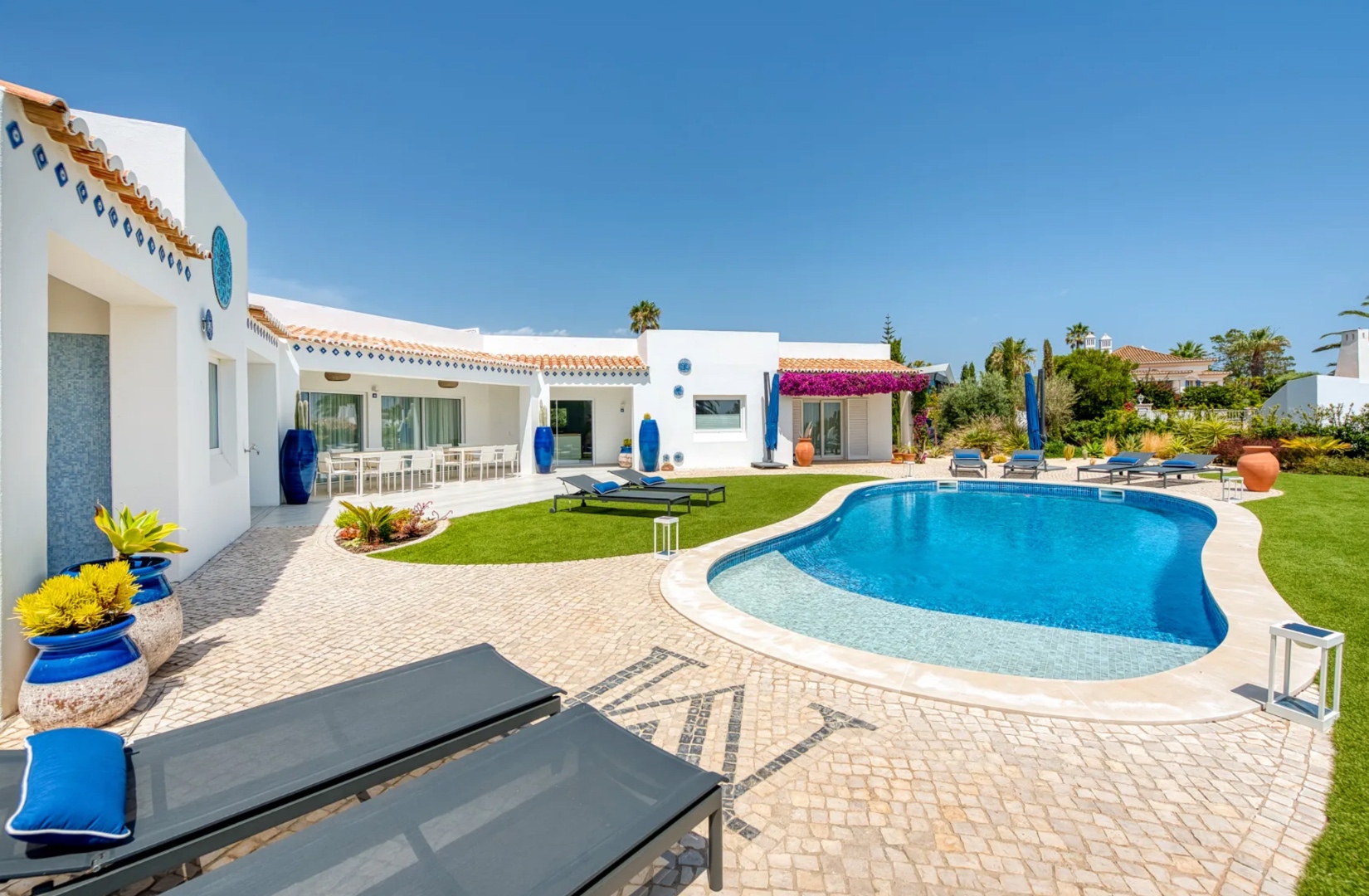
Carvoeiro is the kind of place that converts visitors into buyers. The cliff walks above Praia de Carvoeiro, the ochre rock formations at Algar Seco, the narrow streets of whitewashed villas — it is the Algarve that the brochures have been selling for fifty years, and the short-term rental market reflects that appeal. The Lagoa Alojamento Local sector is dense relative to the municipality's modest size, and the Câmara Municipal de Lagoa administers it with the focused attention of a small authority that knows its territory intimately. For UK owners, understanding how Lagoa works — and how it differs from the larger municipalities on either side — is essential to protecting a rental registration that is, in many cases, central to the property's financial case.
Lagoa is a compact municipality of roughly 23,000 residents covering Carvoeiro, Ferragudo, Porches, Estômbar, and Lagoa town itself. It is bounded by Silves to the north and east, by Portimão to the west, and by the Atlantic to the south. Its coastline — a series of dramatically sculpted limestone bays — is among the most photographed in Portugal, and it draws a British buyer profile distinct from Vilamoura or Tavira: families returning to the same rental property year after year, buyers who purchased in the 1990s and 2000s when Carvoeiro was relatively affordable, and a newer wave of remote-working owners attracted by the combination of scenery and comparative quiet.
AL registration with the Câmara Municipal de Lagoa
Alojamento Local applications in Lagoa are submitted via the national ePortugal.gov.pt Balcão Único Eletrónico, and the Câmara Municipal de Lagoa holds the standard 60-day opposition window under DL 76/2024. Lagoa is not currently a municipality that has signalled intent to designate containment zones — its AL density, though high relative to its size, is driven primarily by villa stock in dispersed coastal parishes rather than by apartment conversion in a pressured urban centre. The câmara's use of the opposition window has, in practice, focused on properties with unresolved planning issues or incomplete safety documentation rather than on housing pressure grounds. That does not mean the window is a formality: an incomplete application — missing a gas certificate, lacking a current energy rating, or submitted with an incorrect address — will be returned and the clock restarted.
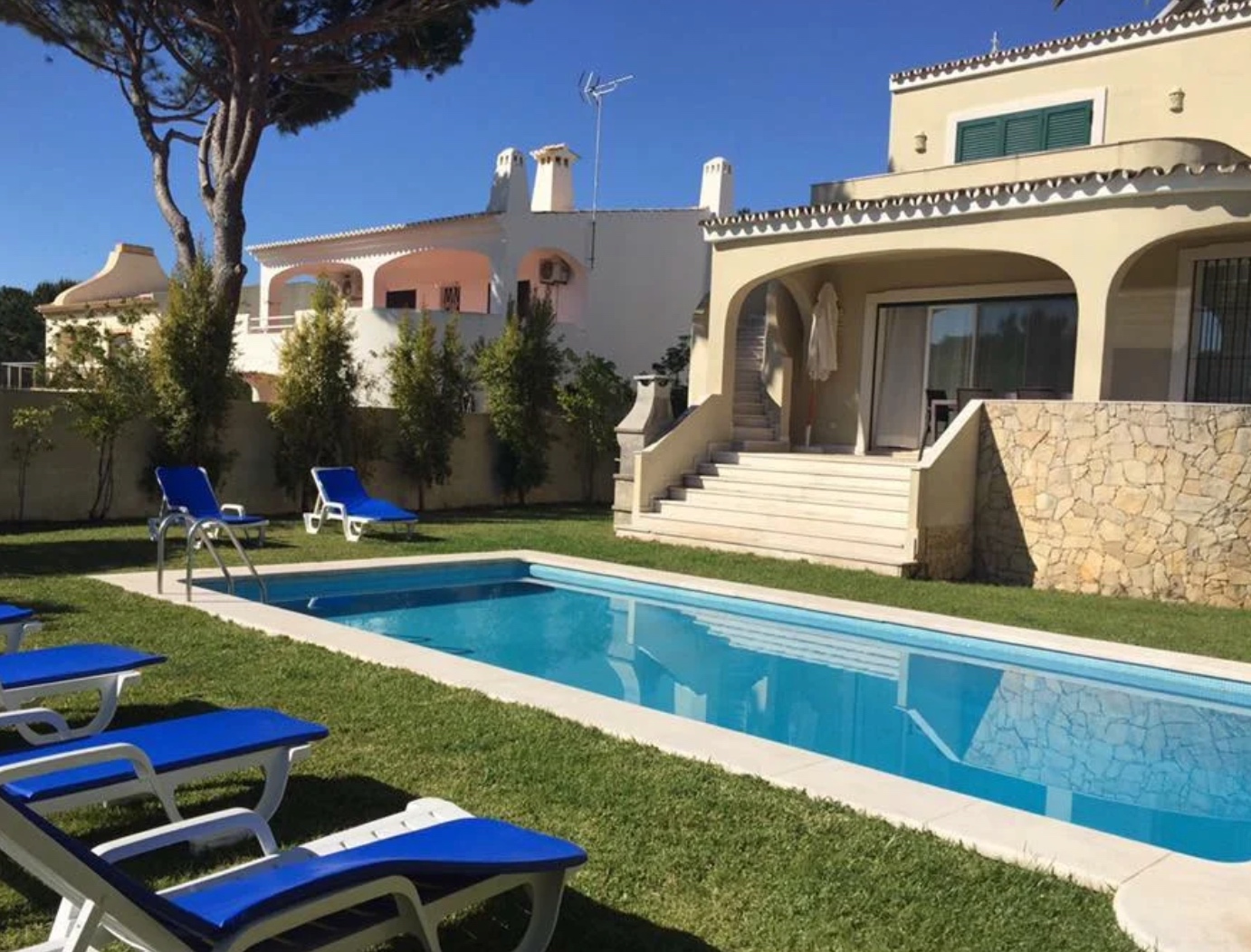
The pre-submission checklist for a Lagoa AL is consistent with the national framework: a valid certificado energético, a gas safety certificate for any property with LPG or mains gas, an electrical safety report, and building insurance. For a property with a pool — which describes the majority of the Carvoeiro short-term rental stock — a pool safety declaration is required. The property must have functioning smoke detectors and a fire safety kit comprising at minimum a powder extinguisher and a kitchen fire blanket. The livro de reclamações must be present and displayed, and the house rules must be posted in at least four languages including Portuguese and English. Guest registration via the AIMA portal is mandatory for every stay.
Fire safety in older Lagoa villa stock
One dimension of compliance that is genuinely specific to Lagoa — and to Carvoeiro in particular — is fire safety in older properties. Much of the villa stock in the municipality was built during the 1980s and 1990s, when fire safety requirements for residential properties were significantly less demanding than the current AL standard. Older stone-built villas with traditional timber roof structures, properties on narrow cliff-top lanes with limited access for emergency vehicles, and properties without mains water connections requiring LPG gas pose compliance challenges that newer resort developments in Albufeira or Vilamoura typically do not.
For Carvoeiro's older cliff-top villas, fire safety is not a box-tick exercise — it requires a property-specific assessment that accounts for the building's age, construction, and access.
The AL framework requires that fire safety equipment is present, functional, and documented — but it does not specify a single configuration. For properties that fall outside the standard villa typology, the requirement is that the safety provision is proportionate and appropriate. In practice, this means owners of older Carvoeiro properties should seek a fire safety assessment from a qualified technician rather than simply purchasing a standard extinguisher kit: the assessment creates a documented record that the property has been evaluated, which is material evidence in the event of an inspection or an insurance claim.
EU 2024/1028 and the Lagoa AL market
EU Regulation 2024/1028 applies equally to Lagoa as to every municipality in Portugal. From 20 May 2026, all platforms operating in the EU short-term rental market are required to verify and report AL registration numbers for every active listing. For Turismo de Portugal, this means Lagoa properties without a current registration number will be identifiable across every platform simultaneously. Carvoeiro has a high proportion of its rental stock listed on Airbnb and HomeAway, and the regulation's enforcement mechanism operates at the platform level: a property without a valid AL number will be delisted rather than warned. For owners who purchased their Carvoeiro property primarily as a rental investment, a platform delisting during the summer season is a direct financial loss that compliance expenditure could have prevented at a fraction of the cost. APC works with Lagoa owners across the municipality — Carvoeiro, Ferragudo, Porches, and Lagoa town — to maintain every certificate and registration obligation so that the property is never exposed to that risk. Read our full guide to DL 76/2024 for the legislative background, or start your APC service to discuss your Lagoa property.